• Skip to main content
  • Skip to footer

Eye Care in Northern Maine | Vision Care of Maine

Northern Maine's Trusted Eye Care Since 1976

  • Home
  • About Us
    • Our Doctors
      • Oscar R. Batlle, M.D.
      • Tracey Clark, D.O.
      • Luke Gamble, O.D.
      • George B. Peters III, M.D.
      • Brad Trask, O.D.
      • Jeremy Valentine, M.D.
      • Curt Tyler Young, M.D.
    • Our Staff
    • Testimonials
  • Services
    • Primary Eye Care
    • Cataract
    • Cornea
    • Retina
    • Glaucoma
  • Locations
    • Bangor
    • Houlton
    • Madawaska
    • Presque Isle ASC
    • Presque Isle
  • Blog
  • Patient Resources
    • FAQ
    • Online Payments

Uncategorized

Aug 28 2020

What is The Cause of My Dry Eyes?

If you have dry eyes, you are not alone. Dry eye syndrome is one of the most common eye conditions, and the cause of dry eyes can vary from person to person.

The cause of dry eyes usually falls into one of two categories: problems with tear production or problems with tear quality. Some people deal with both at the same time. Understanding the cause of dry eyes is the first step toward finding relief.

Keep reading to learn more about the cause of dry eyes and how Vision Care of Maine can help. You can also learn more about our cornea and dry eye care.
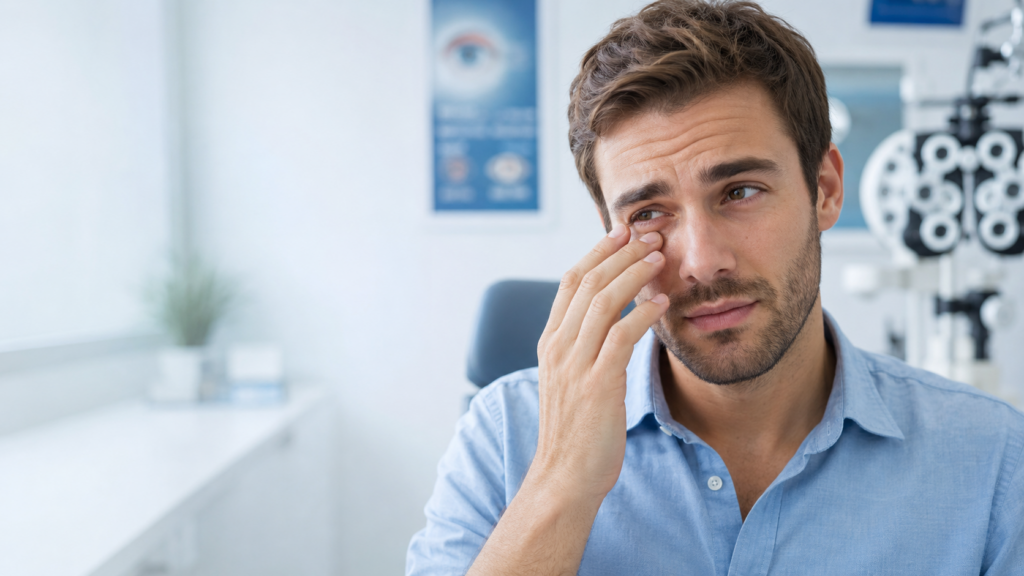
Common Symptoms of Dry Eyes

Dry eye symptoms vary from person to person. You might experience some of these and not others. Common symptoms include:

  • Blurry vision
  • Itchy eyes
  • Pain or burning
  • Gritty sensation
  • Redness
  • Crusty eyes
  • Eye fatigue
  • Headaches

The Cause of Dry Eyes from Tear Production

When your eyes do not make enough tears, the surface of the eye cannot get proper hydration or nutrition. Over time, this leads to worsening symptoms, and the problem can feed on itself.

If your eye doctor at Vision Care of Maine determines that low tear production is the cause of dry eyes for you, simple changes can help:

  • Stay hydrated. Drinking enough water supports healthy tear production.
  • Quit smoking. Smoke irritates the eyes and contributes to dry eye symptoms.
  • Limit screen time. People blink less when looking at screens, which dries out the eye surface.
  • Wear sunglasses outside. Choose pairs with 100% UV protection to shield your eyes.

The Cause of Dry Eyes from Tear Quality

Water is not the only thing your tears need. Healthy tears are a balance of water, oil, and mucus. When this balance is off, tears evaporate too quickly and your eyes feel dry.

Tear quality issues are usually caused by a lack of oil. Meibomian gland disorder is the most common reason for this. The meibomian glands sit in your eyelids and add oil to your tears. When these glands get blocked, your tears lose the oil layer that keeps them on the surface of your eye.

A treatment called meibomian gland expression uses gentle heat and pressure to clear blocked glands. The therapy is short and painless. Some patients even describe it as relaxing.

Other Dry Eye Treatment Options

When lifestyle changes are not enough, your eye doctor may recommend one of these treatments:

  • Medicated eye drops. Prescription drops can stimulate tear production or reduce inflammation.
  • Tear inserts. Small inserts release artificial tears slowly throughout the day.
  • Punctal plugs. Tiny plugs in your tear ducts keep tears on your eye surface longer.

For more information on dry eye care, the American Academy of Ophthalmology offers detailed guides on causes and treatments.

Tired of Dry Eyes?

You do not have to live with the symptoms. The eye doctors at Vision Care of Maine can pinpoint the cause of dry eyes for you and build a treatment plan that works. We see patients in Bangor, Presque Isle, Houlton, and Madawaska.

Schedule a dry eye evaluation with Vision Care of Maine today.

Written by Dirk Cyr · Categorized: Uncategorized

May 28 2020

Can Allergies Cause Other Eye Conditions?

Almost everyone has allergies to something. Eye allergies are more common than you might think, and the connection between eye allergies and conditions like conjunctivitis is important to understand.

Eye allergies happen when your eyes react to an allergen like pollen, dust, or pet dander. This reaction triggers the release of histamines, which cause swelling, burning, itching, and watering. Most eye allergies are annoying but harmless, but in some cases, eye allergies and conditions like severe allergic conjunctivitis can develop and cause real damage if left untreated.

Keep reading to learn how eye allergies and conditions are connected, and when it is time to see an eye doctor. You can also learn more about primary eye care at Vision Care of Maine.

When Eye Allergies and Conditions Become Severe

A severe allergic reaction in your eyes will have many of the typical allergy symptoms, but more intense. Severe eye allergies and conditions to watch for include:

  • Sharp pain in the eyes
  • Strong light sensitivity
  • Trouble seeing clearly
  • Extreme redness
  • Difficulty opening your eyes
  • Blisters around the eyes

If you experience any of these symptoms, seek medical attention as soon as possible. Severe allergic conjunctivitis is most common in people who already have allergies, eczema, hay fever, or asthma.

Even if your symptoms are not severe but they keep coming back, you should still see an eye doctor. When it comes to an allergic reaction, never assume it is not serious.

How to Prevent Eye Allergies and Conditions

The best way to manage eye allergies and conditions is to limit your contact with the allergens that trigger them. Depending on what you react to, that might mean:

  • Stay inside during high pollen counts. Pollen is one of the most common allergens, especially in spring. Check local forecasts for daily pollen counts.
  • Clean your home with a damp cloth. This traps pollen, dust, and pet dander instead of letting it become airborne.
  • Keep your windows closed. This stops outside allergens from drifting indoors.
  • Use an air purifier. Air purifiers filter out airborne allergens passively as you go about your day.

Treating Eye Allergies and Conditions at Home

If your symptoms flare up, eye drops and cold compresses can bring relief. Stop using makeup and contact lenses until the irritation clears up.

Above all, do not rub your eyes. Rubbing makes irritation worse and can even cause damage. If your eyes feel itchy, use artificial tears instead. They help flush out the allergens that are irritating your eyes.

For more information on eye allergies and related conditions, the American Academy of Ophthalmology offers detailed guides.

When to See an Eye Doctor

Eye allergies and conditions that linger or get worse need professional care. Our team at Vision Care of Maine can help you find what is causing your symptoms and build a treatment plan that works for you. We see patients in Bangor, Presque Isle, Houlton, and Madawaska.

Schedule an appointment with Vision Care of Maine today.

Written by Dirk Cyr · Categorized: Uncategorized

Jan 28 2020

How Do I Choose An IOL?

Choosing an IOL is one of the most important decisions you will make before cataract surgery. The right intraocular lens (IOL) shapes how clearly you see for the rest of your life, so it deserves careful thought.

An IOL is the artificial lens that replaces your cloudy natural lens during cataract surgery. There are several types of IOLs available, and choosing an IOL that fits your lifestyle is the goal. Knowing how each kind of lens works will help you and your surgeon land on the right option.

Keep reading to learn about your options for choosing an IOL. You can also learn more about cataract surgery at Vision Care of Maine.

Types of IOLs to Consider When Choosing an IOL

IOLs fall into two main groups: standard IOLs and premium IOLs. Both replace your cloudy lens, but they offer very different vision results.

Monofocal IOLs (Standard)

Monofocal IOLs are the standard option. They provide clear vision at one set distance, usually far. After surgery with a monofocal IOL, you will likely need glasses for reading or other close-up tasks.

The main advantage of a monofocal IOL is cost. It is the most affordable option, but you will stay dependent on glasses for the distances it does not cover.

Multifocal IOLs (Premium)

Multifocal IOLs use the structure of the lens itself to bend light at multiple distances. This means clearer vision at near, intermediate, and far distances without relying as much on glasses.

Accommodating IOLs (Premium)

Accommodating IOLs move slightly inside your eye to change focus. They behave more like your natural lens, which gives a smoother transition between near and far vision.

Toric IOLs (Premium)

Toric IOLs are the only IOL specifically designed to correct astigmatism. They are custom-fitted for patients whose corneas are not perfectly round, which is a major factor when choosing an IOL for someone with astigmatism.

Aspheric IOLs (Premium)

Aspheric IOLs have a shape that closely matches your natural lens. This reduces visual disturbances like halos and glare and provides more natural vision overall.

What If I Am Not Happy After Choosing an IOL?

It is rare for patients to be unhappy with their lens choice, but it does happen. If your IOL is not working for you, it can be exchanged for a different option. The exchange procedure is generally safe, though all surgeries carry some risk.

The best way to prevent this is to have an honest conversation with your surgeon before the procedure. Share your daily activities, hobbies, work, and goals for your vision. Choosing an IOL is a decision that should never be made lightly.

For more on lens options, the American Academy of Ophthalmology offers detailed guides on IOL types.

Ready to Talk About Cataract Surgery?

If cataracts are getting in the way of your daily life, the next step is a cataract evaluation with one of our surgeons. We see patients in Bangor and perform surgery at our Presque Isle Ambulatory Surgery Center.

Schedule a cataract evaluation with Vision Care of Maine today.

Written by Dirk Cyr · Categorized: Uncategorized

Nov 27 2019

What Happens If I Injure My Retina?

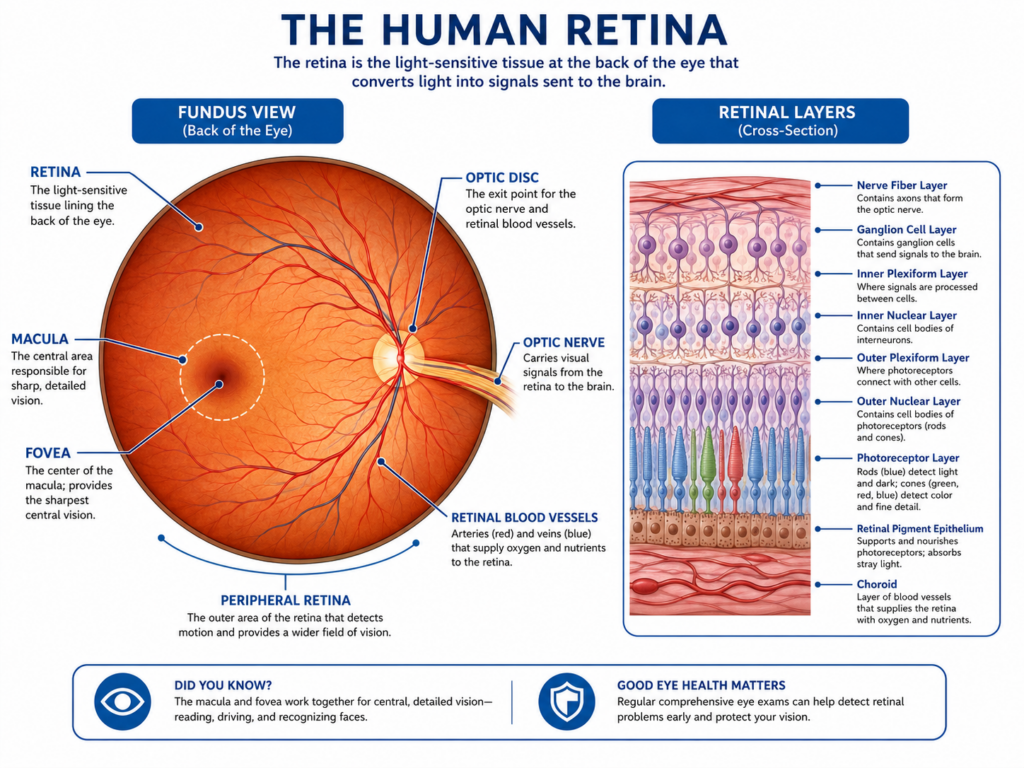
Your retina is one of the most delicate and important parts of your eye. It is a thin layer of tissue lining the back wall of your eye, packed with cells that sense light. The retina gives you the ability to see depth, color, shapes, and brightness.

Because the retina is so complex and so important, an injury can have serious consequences. Knowing what happens when you injure your retina, and what symptoms to watch for, can save your vision.

Keep reading to learn what can happen when you injure your retina. You can also learn more about retina care at Vision Care of Maine.

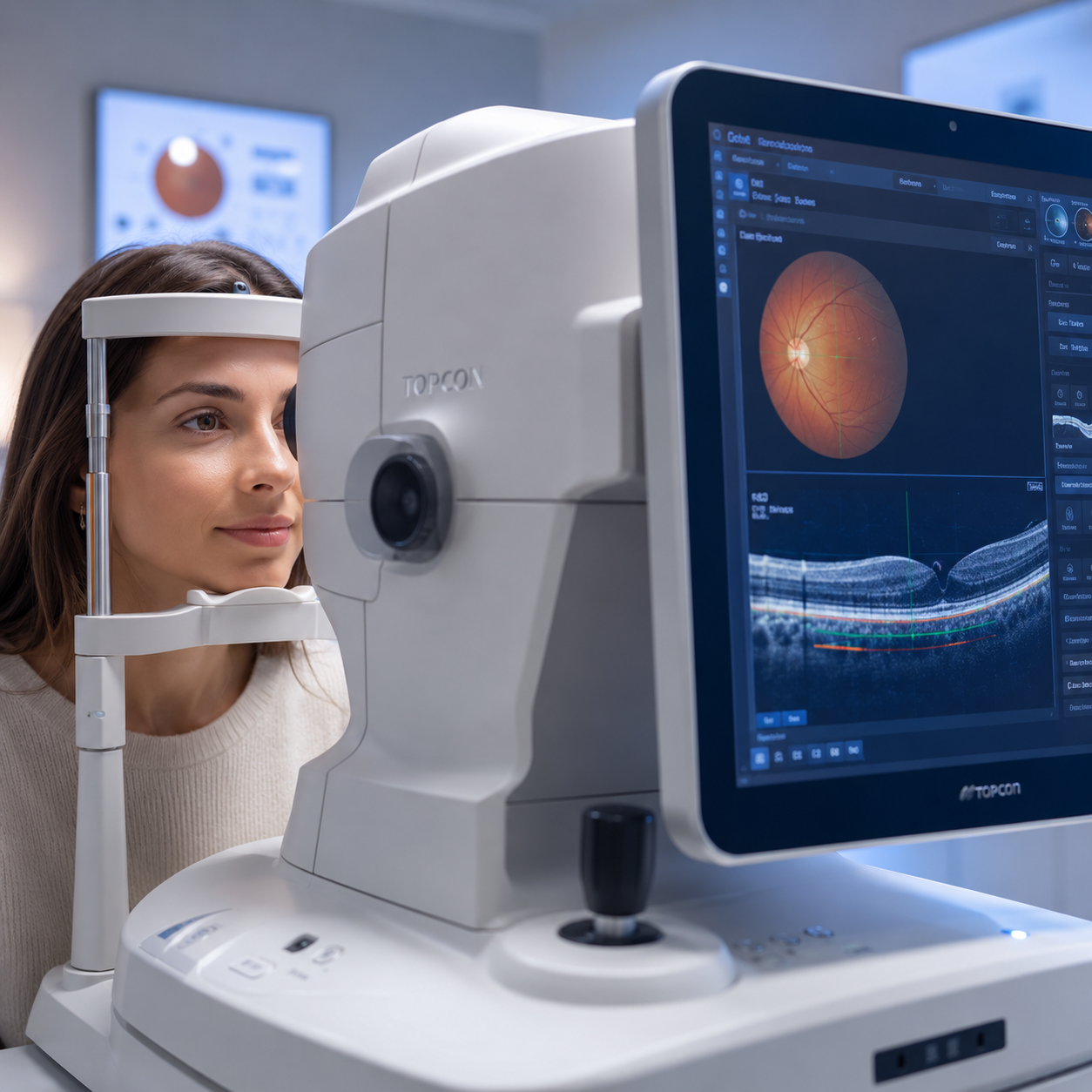
Vision Care of Maine retina specialist examining a patient who may injure your retina

How You Can Injure Your Retina: Retinal Detachment

One of the most serious ways to injure your retina is retinal detachment. This happens when the retina pulls away from the back wall of the eye. A blow to the face, a sports injury, or even sudden movement can sometimes cause it.

When the retina separates from the eye wall, it loses its blood supply. Without blood, retinal tissue can suffer permanent damage. Acting fast is critical.

Symptoms of Retinal Detachment

Early symptoms can be subtle. Watch for:

  • A sudden increase in floaters (small squiggles or spots in your vision)
  • Flashes of light
  • Blurry vision
  • A dark curtain or shadow in part of your visual field

Without treatment, these symptoms worsen, and any vision loss can become permanent. If you injure your retina and notice any of these signs, get to an eye doctor right away.

How Retinal Detachment Is Treated

Retinal detachment is treated with surgery. A serious case often requires a procedure called a vitrectomy. During a vitrectomy, the gel inside your eye is removed and replaced with saline, silicone oil, or a gas bubble. This lets the surgeon reattach the retina to the back wall of the eye.

Recovery varies from patient to patient, but most people heal within 6 weeks. During recovery, you will need plenty of rest and you will need to follow your surgeon’s instructions carefully.

Other Ways You Can Injure Your Retina

Blunt force is not the only way to injure your retina. Eye disease, surgical complications, and chronic conditions can all cause retinal damage over time.

Diabetic Retinopathy

Diabetic retinopathy happens when high blood sugar damages the small blood vessels in the retina. These vessels can leak or bleed, and over time, new abnormal vessels can grow in places they should not. This leads to swelling and scarring that can permanently injure your retina.

Macular Edema

Macular edema is swelling in the macula, the central part of the retina. The macula is responsible for sharp, central vision. When it is damaged, focusing on objects becomes difficult or impossible.

For more information on retinal injuries and diseases, the American Academy of Ophthalmology offers helpful guides.

Protect Your Vision With Regular Eye Care

The best way to protect your retina is to catch problems early. Regular eye exams let your doctor spot warning signs before they cause permanent damage. If you injure your retina or notice sudden changes in your vision, do not wait.

Our retina specialists at Vision Care of Maine see patients in Bangor and across Northern Maine. Schedule an appointment with us today.

Written by Dirk Cyr · Categorized: Uncategorized

Jan 23 2019

Why The Retina Is Important For Sight

Your eye has many parts that work together to give you clear vision. There is the cornea, which focuses incoming light. There is the pupil, which controls how much light enters. And deep inside the eye sits the retina, which is one of the most important structures for sight.

The retina is important for sight because it does the work of converting light into the images you see. Without a healthy retina, the rest of your eye cannot deliver the clear vision you depend on every day.

Keep reading to learn more about why the retina is important for sight and the conditions that can affect it. You can also learn more about retina care at Vision Care of Maine.

Why the Retina Is Important for Sight

The retina is a thin layer of tissue lining the back wall of your eye. It is made up of ten layers, each with a specific job. The retina’s main role is to sense light and turn it into information your brain can use.

The retina does this using special cells called rods and cones. These cells are named after their shape:

  • Rods detect low levels of light and help you see in dim conditions. There are about 120 million rods spread across the retina.
  • Cones work in bright light and detect color. There are about 1 million cones, concentrated in the center of the retina.

When light hits the retina, these cells turn it into electrical signals. The signals travel through the optic nerve to your brain, where they become the images you see. This is the heart of why the retina is important for sight.

Common Retinal Problems That Threaten Sight

The retina is well protected inside your eye, but it can still develop problems. Here are some of the most common conditions to know about.

Macular Degeneration

Macular degeneration affects the macula, the center of the retina. When the macula breaks down, blood vessels can grow and leak underneath it, causing permanent damage to this sensitive tissue. Because the macula handles central vision, this condition can make it hard to read, drive, or recognize faces.

Retinal Detachment

Retinal detachment happens when the retina peels away from or tears off the back wall of the eye. This is a medical emergency. The retina can often be reattached with surgery, but only if treated quickly. Without prompt care, retinal detachment leads to permanent vision loss.

Retinopathy

Retinopathy can show up as a complication of diabetes or for other reasons. In diabetic retinopathy, high blood sugar damages the blood vessels in the retina, which can leak and lead to glaucoma, vision loss, and retinal detachment. Central serous retinopathy has no clear cause, though stress may play a role, and it most often affects young and middle-aged adults.

Protecting the Retina to Protect Your Sight

With the right treatment, many retinal problems are manageable. The key is early detection. If you notice changes in your vision, see your eye doctor right away.

Even if your vision feels fine, regular eye exams can catch issues before they cause permanent damage. For more information on retinal health, the American Academy of Ophthalmology offers detailed resources.

Schedule Your Eye Exam Today

The retina is important for sight, and protecting it starts with regular eye care. Vision Care of Maine sees patients in Bangor, Presque Isle, Houlton, and Madawaska.

Schedule an appointment with Vision Care of Maine today.

Written by Dirk Cyr · Categorized: Uncategorized

Footer

Locations

  • Bangor
  • Presque Isle
  • Presque Isle ASC
  • Houlton
  • Madawaska

Quick Links

  • Pay Bill
  • Patient Resources
  • FAQ
  • About Us
  • Privacy Policy

Connect

(207) 945-6200

Mon-Fri: 8am-5pm

Copyright © 2026 ยท Maintained by Cyrious.ai