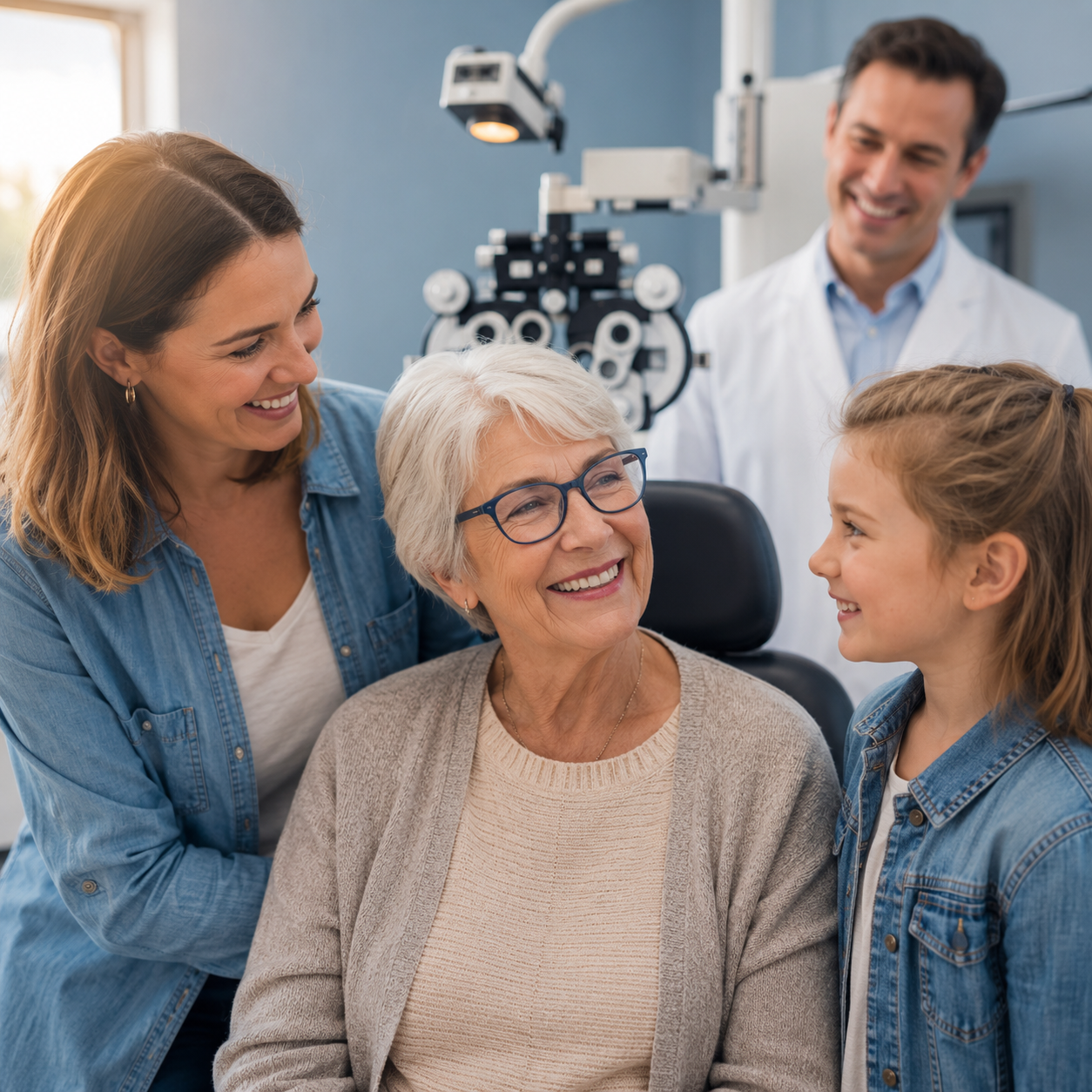
Eye Exams
Protecting your vision long-term starts with regular eye exams. Primary means first, and the first step in caring for your eyes is establishing a relationship with a primary eye care doctor. Vision Care of Maine provides comprehensive eye exams at multiple locations.
What Is Primary Eye Care?
Primary eye care is the foundation of healthy vision throughout your lifetime. It’s about protecting your sight, catching problems early, and making sure you have a doctor who knows your eyes and your history.
Primary care starts with a complete eye exam. Your eye doctor looks at every part of your visual system, including your eyelids, eyelashes, tear glands, cornea, lens, and retina. The goal is to make sure every part of your eye is healthy and to catch any problems as soon as possible.
Your visual acuity (how well you see) is measured with and without glasses to determine if you need a prescription or an update to your current one. If you need glasses or contacts, we prescribe them and fill the prescription in our optical shop with lenses suited to your vision needs and frames at an affordable price.
What’s Included in a Comprehensive Eye Exam
A comprehensive eye exam is more than checking how well you see. Your doctor carefully evaluates the health and function of your entire eye. Here’s what we look at:
Visual Acuity
How well you see at distance and up close, with and without correction.
Eye Health Check
Examination of the front and back of each eye, looking for disease and damage.
Eye Pressure
Glaucoma screening to catch elevated pressure before vision is lost.
Prescription Update
Refraction to determine if you need glasses or a new prescription.
Do You Need an Eye Exam?
Not sure if it’s time for an eye exam? Answer these 6 questions to find out.
1. Has it been more than a year since your last comprehensive eye exam?
2. Have you noticed changes in your vision, even small ones?
3. Do you have headaches, eye strain, or tired eyes after reading or using a screen?
4. Do you have diabetes, high blood pressure, or another chronic health condition?
5. Are you 60 years of age or older?
6. Has anyone in your family had glaucoma, macular degeneration, or another eye disease?
Why Regular Eye Exams Matter
Many eye conditions, including glaucoma and early cataracts, have no symptoms in their early stages. By the time you notice something is wrong, damage may already be done. Regular eye exams catch these problems early, when treatment works best.
Establishing a relationship with your eye doctor matters too. Your doctor needs to know what’s normal for your eyes. That way, if a problem comes up later, we have a baseline to compare against and can spot changes faster.
If you are diabetic, yearly eye exams are not optional. Diabetes can affect your eyes before you notice any vision changes, and early treatment is critical.
For more on eye health, visit the American Academy of Ophthalmology.
How Often Should You Have an Eye Exam?
Children (under 18)
First exam at age 3, then every 1-2 years if no vision issues, yearly if wearing glasses or contacts.
Adults 18-39
Every 2-3 years if no vision problems, yearly if wearing glasses or contacts.
Adults 40-59
Every 1-2 years to catch age-related conditions like presbyopia and early glaucoma.
Adults 60 and older
Yearly. Risk of cataracts, glaucoma, and macular degeneration increases with age.
Anyone with diabetes
Yearly, regardless of age. Diabetes can damage your eyes without warning.
If You Need Specialty Care
If your eye exam reveals a condition that needs specialty care, your primary eye doctor will refer you to the right specialist on our team. We have specialists in cataract surgery, retinal disease, glaucoma, and cornea care, all under one practice.
Your primary eye doctor will follow up to make sure you receive the care you need. In some cases, this means taking care of you after surgery. We make sure you understand any eye condition you have and all of your treatment options.
Primary Eye Care Team
Our optometrists and ophthalmologists who provide primary eye care and comprehensive eye exams.



Locations Offering Primary Eye Care
Schedule Your Eye Exam
The first and best thing you can do to protect your vision is establish a relationship with a primary eye care doctor. Call today to schedule your first appointment.